
In today’s fast-changing business environment, organizations face increasing risks from cyberattacks, natural disasters, supply chain disruptions, technology failures, pandemics, and operational emergencies.
ISO 22301 provides a structured framework for organizations to prepare for, respond to, and recover from disruptive incidents.
As businesses focus on business resilience, risk management, cybersecurity, and operational continuity, ISO 22301 has become an important international standard for maintaining critical operations.

What is ISO 22301?
ISO 22301:2019 – Security and resilience – Business continuity management systems (BCMS) is an international standard that specifies requirements for establishing, implementing, maintaining, and continually improving a Business Continuity Management System.
The standard helps organizations identify potential threats, understand their business impact, develop response strategies, and ensure the continued delivery of critical products and services during disruptions.
Unlike traditional disaster recovery approaches that primarily focus on IT systems, ISO 22301 takes a broader business continuity management approach covering people, processes, technology, facilities, suppliers, communication, and other critical resources.

Why is ISO 22301 Important?
Business disruptions can result in financial losses, regulatory challenges, reputational damage, customer dissatisfaction, and loss of market confidence. ISO 22301 enables organizations to become more proactive rather than simply reacting when an incident occurs.
- Improved Business Resilience: Strengthens the organization's ability to withstand unexpected disruptions.
- Identification and prioritization of critical business processes.
- Better risk assessment and business impact analysis (BIA).
- Defined roles and responsibilities during emergencies.
- Improved crisis communication and incident response.
- Reduced downtime and faster organizational recovery.
- Support for regulatory and contractual requirements.
- Continuous improvement of business continuity capabilities.

KEY COMPONENTS OF ISO 22301
1. Business Impact Analysis
Business Impact Analysis (BIA) identifies critical activities and determines the consequences of their disruption.
Organizations establish priorities such as Recovery Time Objective (RTO) and Recovery Point Objective (RPO) where applicable.
- Identify critical business activities.
- Determine the impact of disruption.
- Establish recovery priorities.
- Define appropriate recovery objectives.

2. Risk Assessment
Organizations identify potential threats and vulnerabilities that could interrupt operations.
These may include cyber incidents, equipment failures, natural disasters, utility failures, human error, and supply chain interruptions.
- Cyber incidents and security threats
- Equipment and technology failures
- Natural disasters and environmental risks
- Supply chain interruptions
- Human error and operational failures

3. Business Continuity Strategies
Based on the identified risks and impacts, organizations develop appropriate continuity strategies.
- Alternative facilities
- Backup systems
- Remote working arrangements
- Redundant infrastructure
- Alternate suppliers
- Emergency resources

4. Business Continuity Plans
A Business Continuity Plan (BCP) defines how an organization will respond to and recover from specific disruptive events.
Clear procedures, responsibilities, escalation mechanisms, and communication channels are essential for an effective response.
- Clearly documented response procedures
- Defined responsibilities and emergency teams
- Escalation and decision-making mechanisms
- Emergency communication channels

5. Testing and Exercises
Plans should not remain theoretical. ISO 22301 emphasizes testing, exercising, monitoring, and evaluation to determine whether continuity arrangements actually work.
Regular simulations and scenario-based exercises help identify weaknesses before a real crisis occurs.
- Emergency response exercises
- Recovery simulations
- Testing of documented procedures
- Identification of weaknesses
- Continuous improvement

ISO 22301 and Cyber Resilience
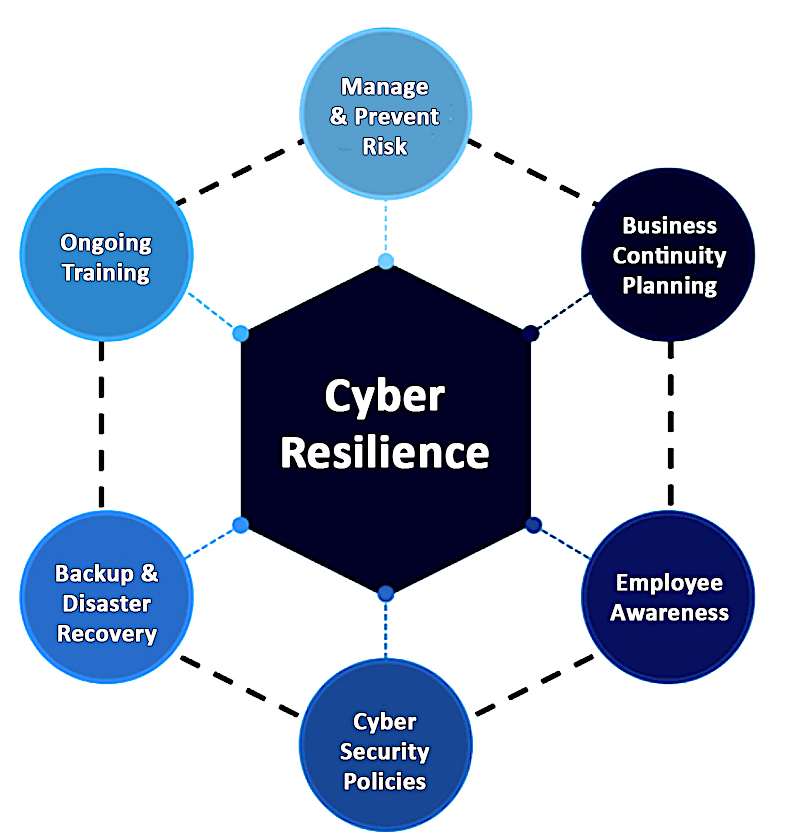
With the increasing frequency of ransomware attacks, data breaches, cloud outages, and technology disruptions, cyber resilience has become a major business priority.
ISO 22301 complements cybersecurity frameworks by focusing on maintaining business operations when technology or information systems are compromised.
Organizations can integrate their BCMS with ISO 27001 Information Security Management Systems, creating a stronger approach to information security and business continuity.
- Cyber incident response
- Backup and recovery
- Information security
- Operational recovery
ISO 22301 CERTIFICATION PROCESS

ISO 22301 Certification
Organizations seeking certification typically conduct a gap assessment, establish and implement the BCMS, perform risk assessments and BIA, develop continuity plans, conduct exercises, perform internal audits and management reviews, and address identified nonconformities.
An accredited certification demonstrates that the organization has established a systematic approach to business continuity and organizational resilience.
- Gap assessment
- BCMS implementation
- Documentation and continuity plans
- Internal audits and management reviews
- Certification assessment

Conclusion
ISO 22301 is more than a certification—it is a strategic framework for building an organization that can anticipate, respond to, and recover from disruption.
In an era of digital transformation, cyber threats, supply chain volatility, climate-related risks, and evolving regulatory expectations, business resilience is becoming a competitive advantage.
Organizations that invest in ISO 22301 can strengthen operational continuity, protect critical services, improve stakeholder confidence, and create greater preparedness for an uncertain future.

Get in Touch! Ask us any question/query on +91-9867-180-395. We would be happy to answer your concerns. You can also drop an email at info@ascentinspecta.com