
Blog Details
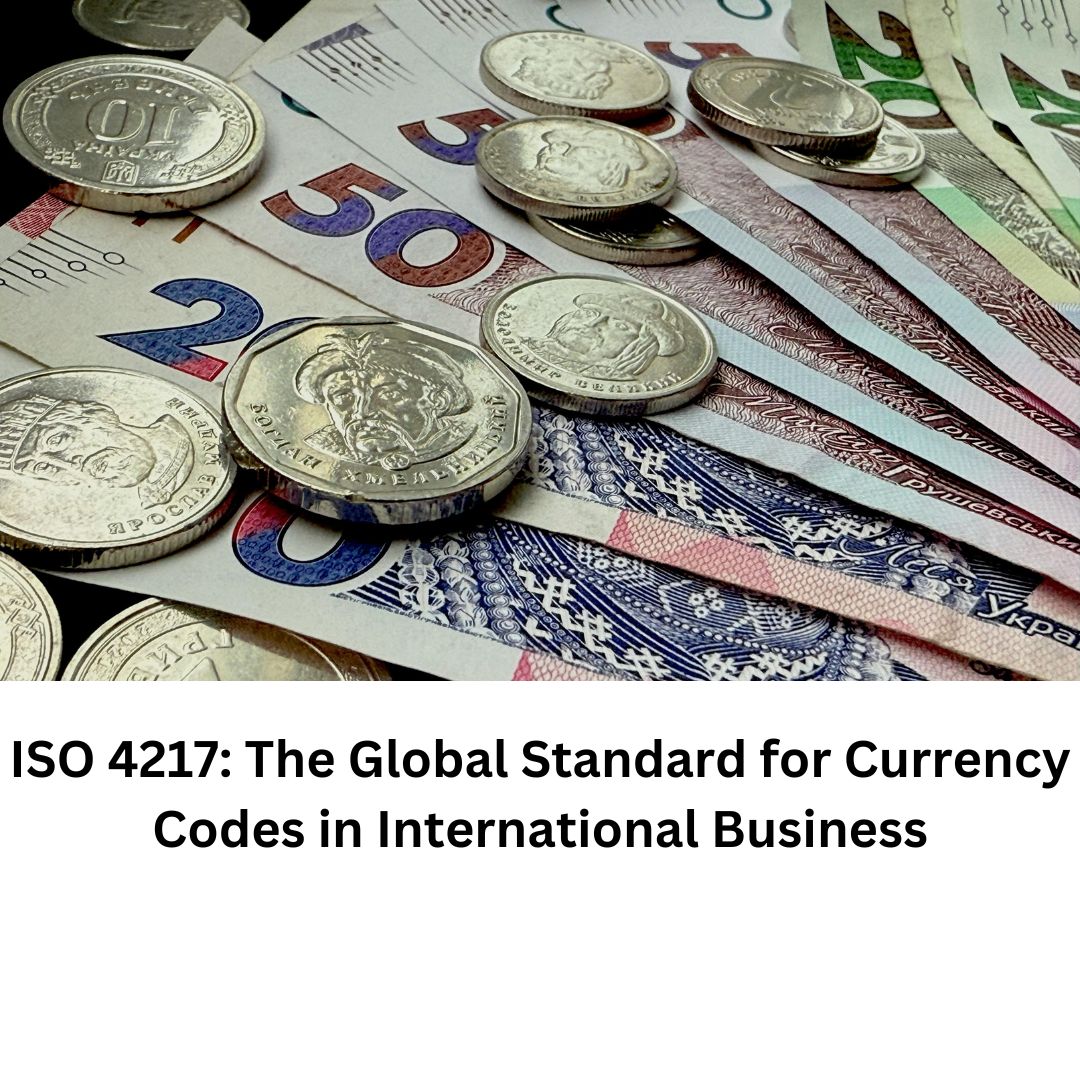
ISO 4217: The Global Standard for Currency Codes in International Business
🌍 Introduction
In today's interconnected global economy, businesses, banks, financial institutions, e-commerce platforms, and governments conduct millions of international transactions every day. To ensure consistency and eliminate confusion caused by different currency names and symbols, organizations worldwide rely on ISO 4217, the internationally recognized standard for currency codes.
Developed by the International Organization for Standardization (ISO), ISO 4217 provides a standardized system for representing currencies across countries and territories. Whether you are involved in international trade, foreign exchange, banking, fintech, accounting, or digital payments, understanding ISO 4217 is essential for smooth financial operations.
This article explores ISO 4217, its importance, structure, benefits, applications, and how organizations can leverage it to improve global financial communication.

💱 What is ISO 4217?
ISO 4217 is an international standard that defines three-letter alphabetic codes and three-digit numeric codes for currencies worldwide. The standard was first published in 1978 and is maintained by the ISO 4217 Maintenance Agency.
The purpose of ISO 4217 is to provide a unique identifier for every currency, reducing ambiguity and ensuring accuracy in international financial transactions.

Examples of ISO 4217 Currency Codes
- 🇺🇸 USD – United States Dollar
- 🇪🇺 EUR – Euro
- 🇮🇳 INR – Indian Rupee
- 🇬🇧 GBP – British Pound Sterling
- 🇯🇵 JPY – Japanese Yen
- 🇦🇺 AUD – Australian Dollar
- 🇨🇦 CAD – Canadian Dollar
- 🇨🇭 CHF – Swiss Franc
These standardized codes are recognized globally by banks, payment gateways, accounting systems, and financial institutions.
⭐ Why ISO 4217 is Important

Different countries may use similar currency symbols. For example, the dollar symbol ($) is used by several countries including the United States, Canada, Australia, and Singapore.
Without standardized currency codes, international transactions could become confusing and prone to errors. ISO 4217 helps eliminate this confusion by assigning unique identifiers to each currency.
Key Benefits of ISO 4217
- 🌐 Global Consistency
- ✅ Error Reduction
- ⚡ Efficient Financial Processing
- 📊 Enhanced Data Management
- 🤝 Improved International Trade
⚙️ Structure of ISO 4217 Currency Codes

🔤 Alphabetic Codes
The ISO 4217 standard typically uses a three-letter currency code. The first two letters usually represent the country's ISO 3166 country code, while the third letter often represents the currency name.
Examples
- USD = United States Dollar
- INR = Indian Rupee
- JPY = Japanese Yen
- GBP = Great Britain Pound
🔢 Numeric Codes
Each currency also receives a unique three-digit numeric code.
- USD = 840
- INR = 356
- EUR = 978
- JPY = 392
Numeric codes are especially useful in computer systems and international financial reporting.
🏦 Industries That Use ISO 4217

- 🏦 Banking and Financial Services
- 📱 Fintech Companies
- 🛒 E-Commerce Platforms
- ✈️ Travel and Tourism
- 📑 Accounting and ERP Systems
🚀 ISO 4217 and Digital Transformation

As businesses increasingly adopt digital technologies, ISO 4217 plays a critical role in enabling global financial interoperability.
Technologies That Depend on ISO 4217
- 🌐 Online payment gateways
- 🏦 Cross-border banking systems
- ₿ Cryptocurrency exchanges
- 📊 ERP software
- 📈 Financial analytics platforms
- 📱 Digital banking applications
🌎 ISO 4217 in International Trade

- 📄 Prepare invoices accurately
- 💹 Manage foreign exchange risks
- 🚢 Streamline import-export operations
- 🔍 Improve financial transparency
- ✔️ Ensure compliance with international banking standards
🔗 Relationship Between ISO 4217 and Other Standards

- 📋 ISO 9001 – Quality Management
- 🔒 ISO 27001 – Information Security
- 📨 ISO 20022 – Financial Messaging
- ⚠️ ISO 31000 – Risk Management
🔮 Future Trends in ISO 4217

- 📱 Growing Digital Payments
- 🛍️ Expansion of Global E-Commerce
- 🚀 Fintech Innovation
- 🤖 AI and Blockchain Integration
📌 Conclusion

ISO 4217 serves as the global foundation for currency identification and international financial communication. By providing standardized currency codes, it enables businesses, banks, governments, and financial institutions to conduct transactions with accuracy, efficiency, and confidence.
In an era of globalization, digital payments, and cross-border commerce, ISO 4217 continues to play a vital role in ensuring smooth financial operations. Organizations that understand and implement ISO 4217 standards can improve transaction accuracy, reduce operational risks, and enhance global business performance.
🤝 Why Choose Ascent Inspecta?

Ascent Inspecta is a trusted name in certification, compliance, inspection, auditing, and consulting services. With extensive industry expertise and a customer-centric approach, we help organizations achieve international standards and regulatory compliance efficiently and cost-effectively.
- ✔️ Industry-Experienced Consultants
- ✔️ End-to-End Compliance Support
- ✔️ Customized Business Solutions
- ✔️ Transparent Processes
- ✔️ Timely Project Delivery
- ✔️ Cost-Effective Services
- ✔️ Global Compliance Expertise
Choose Ascent Inspecta as your compliance partner and move confidently toward sustainable growth and international recognition.
Leave a Comment
We would love to hear your thoughts! Please leave your comment below: